Attractiveness AI
- 4.1
- Rating
- 10.00K
- Installs
- Free
- Price
 Analysis by App-foxy
I tried Attractiveness AI as a beauty app with a simple question in mind: is it useful after the first burst of curiosity, or does it become another tool that gets opened once and forgotten? My first impression was that its appeal comes from turning a personal, subjective topic into something you can explore on your phone. The idea is easy to understand, and the free entry makes it approachable for anyone who wants to experiment with their look without immediately committing to a consultation, a new product, or a dramatic change.
That convenience is also the app’s central limitation. An AI-based attractiveness opinion can be interesting, but it should be treated as a prompt for reflection rather than a final judgment about your appearance. I found the experience more valuable when I used it to compare styling ideas and notice presentation choices than when I looked for an objective score. If you keep that distinction in mind, the app has a reasonable place in a beauty routine. If you want professional skincare advice, precise facial analysis, or a replacement for a stylist, it is not the right tool.
From first-week curiosity to a lasting beauty habit
I find it helpful to think about the shift from trying Attractiveness AI once to deciding whether it deserves an occasional place in a beauty routine. In this section, I’ll focus on how a specific purpose, rather than frequent checking, can keep the experience grounded and useful. That also sets up the question of what value remains when the initial curiosity has passed.
You May Also Like

 AccuWeather: Weather Radar
AccuWeather Review: A Quick, Clear Forecast for Everyday Decisions
For everyday plans, the best forecast is the one you can understand quickly. AccuWeather makes rain timing, radar, and local conditions easy to act on, with a few trade-offs.

 Hill Climb Racing
Why Hill Climb Racing Still Turns Crashes Into One More Run
A tiny car, a bumpy hill and one more upgrade: Hill Climb Racing keeps resurfacing because its simple chaos makes every near-miss feel personal.

 AliExpress - Shopping App
AliExpress Makes Global Shopping Feel Personal, but Shoppers Bear the Risk
AliExpress turns a global marketplace into a pocket-sized discovery engine. Its reach is useful, its shopping loop compelling, and its trade-offs easy to miss.

 Lords Mobile: Kingdom Wars
Lords Mobile Is a Kingdom-Building Routine, Not a Quick Match
A case-by-case verdict on the building, battles, device demands, and social commitments that make Lords Mobile rewarding for some players and exhausting for others.

 PDF Scanner app - TapScanner
TapScanner Makes Paperwork Easier to Capture, Check, and Share
TapScanner makes scanning with a phone feel less like a rescue operation and more like a dependable step in getting work done. Its capture tools are useful, though not flawless.

 Block Blast!
 Shows How Much a Puzzle Game Can Leave Out
A quiet grid game shows why puzzle players increasingly value instant clarity, repeatable skill and low-pressure play—and where the genre still needs to catch up.
More From Our News Desk
View All News


Why the first sessions feel engaging
The first week is where the app has its strongest pull. The concept of “Attractiveness AI” is immediately understandable, and the store summary presents it as a way to explore and elevate your look. In practice, that makes it easy to approach with a low-pressure mindset. I could use it when I was curious about how a different presentation might come across, rather than treating the process like a formal beauty appointment.
It belongs to the beauty category, but it feels different from a standard makeup catalog or a routine tracker. Instead of mainly showing products or asking you to follow a fixed sequence, it invites a more personal kind of exploration. That makes it especially appealing to people who are preparing for a photo, considering a change in hairstyle, or simply trying to understand which aspects of their appearance they want to emphasize.
The app is free to download, which removes the biggest barrier to trying it. There are in-app purchases priced at $3.99 per item, so I would approach the experience with a clear rule: explore the free experience first, then decide whether any paid option adds enough value to justify it. That small pause matters because curiosity can make optional beauty tools feel more essential than they really are.
I also appreciate that the content rating is Everyone. That makes the app easier to consider as a casual exploration tool rather than something restricted to a narrow audience. Still, an Everyone rating does not make every result equally suitable for every person. Younger users and anyone who is sensitive about appearance should remember that an automated assessment is not a measure of personal worth.
A realistic first-week scenario
Imagine preparing for a family event or a new profile photo. You take a consistent photo, explore the app, and use the result to ask better questions: does the lighting hide the features I actually want to show? Would a different angle make the image feel more natural? Am I reacting to the app’s suggestion, or do I genuinely prefer the change? That workflow is more useful than taking repeated photos until one result feels flattering.
My practical advice is to keep the conditions as consistent as possible during comparisons. Use similar lighting, avoid changing several aspects of your appearance at once, and make notes about what you personally like. Otherwise, you may end up comparing lighting and camera position instead of learning anything about your style. This is one of the app’s less obvious trade-offs: it can encourage experimentation, but careless testing can produce confusing conclusions.
Another useful habit is to separate “presentation” from “appearance.” A result may reflect how a face is photographed or framed, while your real goal may be a haircut, skincare change, makeup choice, or clothing adjustment. I found the app most constructive when it helped me identify a presentation question, not when I allowed it to define the answer.
What the developer brings to the experience
Attractiveness AI is developed by DataDolphin. The app has an average rating of 4.1 from around two hundred ratings, which suggests that many users find the basic idea worthwhile while leaving room for mixed experiences. I would read that as a reason to try it personally rather than assuming it will suit everyone. Beauty tools are particularly dependent on expectations, photo conditions, and how comfortable a person is with automated judgments.
The current version is 1.7.1, and it runs on Android 7.0 or later. That broad compatibility is helpful if you use an older Android phone, although the experience will still depend on the camera and screen quality of the device. A newer phone may make it easier to take clear, consistent images, while an older handset can introduce blur or poor lighting that affects how useful the output feels.
What remains useful after the novelty fades
Long-term usefulness is less about opening the app regularly and more about knowing when its perspective can help with a real choice. I’ll look at how to preserve that value without letting automated feedback outweigh comfort, personal taste, or practical needs. From there, it becomes easier to judge whether this is a tool to keep nearby or simply one to use for a particular experiment.
Month-to-month value depends on a changing purpose
After the first few sessions, the novelty naturally weakens. You already know the basic idea, and repeating the same kind of assessment without a specific reason can become empty. For me, the app earns recurring attention only when it is connected to a real decision. That might be checking how a new look photographs, comparing a small styling adjustment, or revisiting a personal goal after enough time has passed to notice a difference.
This is not an app I would open every day. Daily use would encourage over-analysis and would make ordinary changes in lighting, expression, or mood feel more important than they are. A better rhythm is occasional use around a concrete event or a planned change. That turns the app from a constant judge into a reference point.
The most valuable long-term workflow is to create your own record of what you changed and why. You do not need a complicated spreadsheet. A short note such as “same lighting, different hairstyle” or “tested a more natural presentation” can prevent you from misremembering the comparison. Without that context, repeated assessments may look like progress or decline when the real difference is simply the photo.
This approach also answers an important question: can the app help with maintenance? Yes, but mainly as a reflection tool. It can help you revisit a look and decide whether it still feels like you. It is less suitable as a strict monitoring system because attractiveness is not a stable technical measurement. If your goal is tracking skincare symptoms, product reactions, or medical concerns, a dedicated health or skincare journal would be a better choice.
Where it fits beside familiar alternatives
Compared with a makeup tutorial app, Attractiveness AI is less instructional. A tutorial can show exactly how to apply a product or recreate a style, while this app is more useful at the stage where you are deciding what direction to explore. Compared with a beauty routine tracker, it is less focused on consistency and reminders. A tracker is better when your main challenge is remembering sunscreen, cleansing, or product rotation.
It also differs from asking friends for opinions. Friends can understand your personality, occasion, and preferences in a way an automated tool cannot. The app is more private and convenient, but its feedback is less personal. I would use it before a conversation with someone I trust, not instead of that conversation.
A professional stylist or makeup artist remains the stronger option when you need tailored advice about face shape, hair texture, skin condition, color choices, or a major change. The app may help you arrive with clearer questions, but it cannot replace the experience of someone who can inspect details, ask about your lifestyle, and adapt recommendations in real time.
That comparison reveals the app’s best position: it is a low-cost exploration layer between vague curiosity and a more serious beauty decision. It is not the most complete option in any one beauty specialty, but it can be convenient when you want a quick way to think through your presentation before spending time or money elsewhere.
Three practical ways to get more from it
- Use controlled comparisons. Keep lighting, distance, expression, and camera angle similar so that you are testing one change instead of several accidental variables.
- Turn results into questions. If a result makes you curious about framing, hair, or makeup, test that specific idea rather than chasing a better-looking number or impression.
- Schedule occasional reviews. Revisit your choices around genuine changes or events, not whenever you feel uncertain about your appearance. This reduces the risk of turning the app into a source of unnecessary self-criticism.
These habits make a noticeable difference because the app’s value is shaped by the user’s method. A rushed selfie followed by repeated checking can create fatigue very quickly. A controlled comparison with a clear purpose can produce a useful insight even when the result is not what you expected.
The maintenance burden is mostly psychological
There is no complicated routine required to keep the app useful. The real maintenance burden is deciding when to trust the process and when to step away. You need to provide reasonably consistent images, remember that automated feedback is limited, and avoid treating every result as a verdict. That is more demanding than simply installing a beauty app, but it is also what prevents the experience from becoming misleading.
I would not recommend using it when you are already having a difficult day about your appearance. An unexpected result can intensify that mood, even if the result says more about the image than about you. In those moments, a practical routine, a conversation with a trusted person, or advice from a qualified professional is more supportive.
There is also a financial maintenance question. Because optional items cost $3.99 each, it is worth deciding in advance what you are actually trying to gain from a purchase. If the item does not support a specific experiment or recurring need, the free experience may be sufficient. The app is easiest to recommend when users remain in control of that decision instead of assuming that paid content is necessary for meaningful use.
What can cause fatigue over time
The biggest source of fatigue is repetition without progress. If every session asks essentially the same question, the experience can shift from exploration to reassurance-seeking. That is not a problem unique to this app, but its focus on attractiveness makes the risk more noticeable. I found it healthier to use the app for occasional decisions and then return to real-world feedback from comfort, confidence, and practicality.
Another source of frustration is the gap between an AI impression and human taste. A look can be technically polished and still feel wrong for your personality. Conversely, a change that seems ordinary in an image may be exactly right for your daily life. The app cannot know whether you prefer low-maintenance hair, dislike heavy makeup, work in a conservative environment, or want to appear more relaxed rather than more conventionally attractive.
Photo inconsistency can also make the experience tiring. Different lighting, camera processing, facial expressions, and angles may lead to results that seem contradictory. Instead of interpreting every difference, I would treat unusual changes as a signal to retake the image under more controlled conditions. If the process still feels confusing, that is a good point to stop rather than keep testing.
For some users, the language of attractiveness itself may be uncomfortable. If you prefer beauty tools that focus on creativity, routine, or self-expression, a makeup planner or style board may be a better match. Attractiveness AI is most appropriate for people who can engage with the concept lightly and critically, without allowing it to become a measure of self-esteem.
Who should try it, and who should skip it
I would recommend trying it if you enjoy experimenting with your presentation, want a private starting point before asking for advice, or are curious about how small visual changes affect a photo. It can be especially handy before a portrait session, a social event, or a profile update, provided you use it to refine ideas rather than seek certainty.
I would be more cautious if you want medical skincare guidance, detailed product recommendations, professional color analysis, or a step-by-step beauty education. Those needs call for specialized tools or human expertise. I would also skip it if automated attractiveness feedback is likely to make you check your appearance repeatedly or feel worse about yourself.
The app has passed ten thousand installs, so it has attracted a meaningful early audience, but I would not interpret that as proof that it belongs in everyone’s regular routine. Its value is personal and situational. Some people will enjoy the experiment and return when they have a specific goal; others will find that the concept offers too little practical guidance after the initial curiosity.
My long-term verdict
After the novelty fades, Attractiveness AI does not earn permanent daily space on my phone. It does earn occasional space as a lightweight beauty exploration tool. The difference matters: I see it as something to open when I have a question, not something to consult whenever I need reassurance.
The strongest case for keeping it is its accessibility. It is free to start, available to users on Android 7.0 and later, rated for Everyone, and focused on a topic many people prefer to explore privately. Used with consistent photos and realistic expectations, it can help turn vague curiosity into a more specific styling experiment.
The weakest case is repeated checking. The app cannot replace personal taste, trusted feedback, or professional advice, and its automated perspective should never become the main authority over how you feel about yourself. Paid items may be worthwhile for a clearly defined purpose, but they are not automatically necessary simply because they are available.
My recommendation is straightforward: try it during a real decision, keep your comparisons controlled, write down what you are testing, and judge the result by whether it helps you make a practical choice. If it does, the app has recurring value in small doses. If it only makes you chase a more flattering assessment, remove it from the routine. Its lasting usefulness comes from guided experimentation, not from treating attractiveness as a score to maintain.
FAQs for Attractiveness AI
01What is Attractiveness AI, and how does it work?
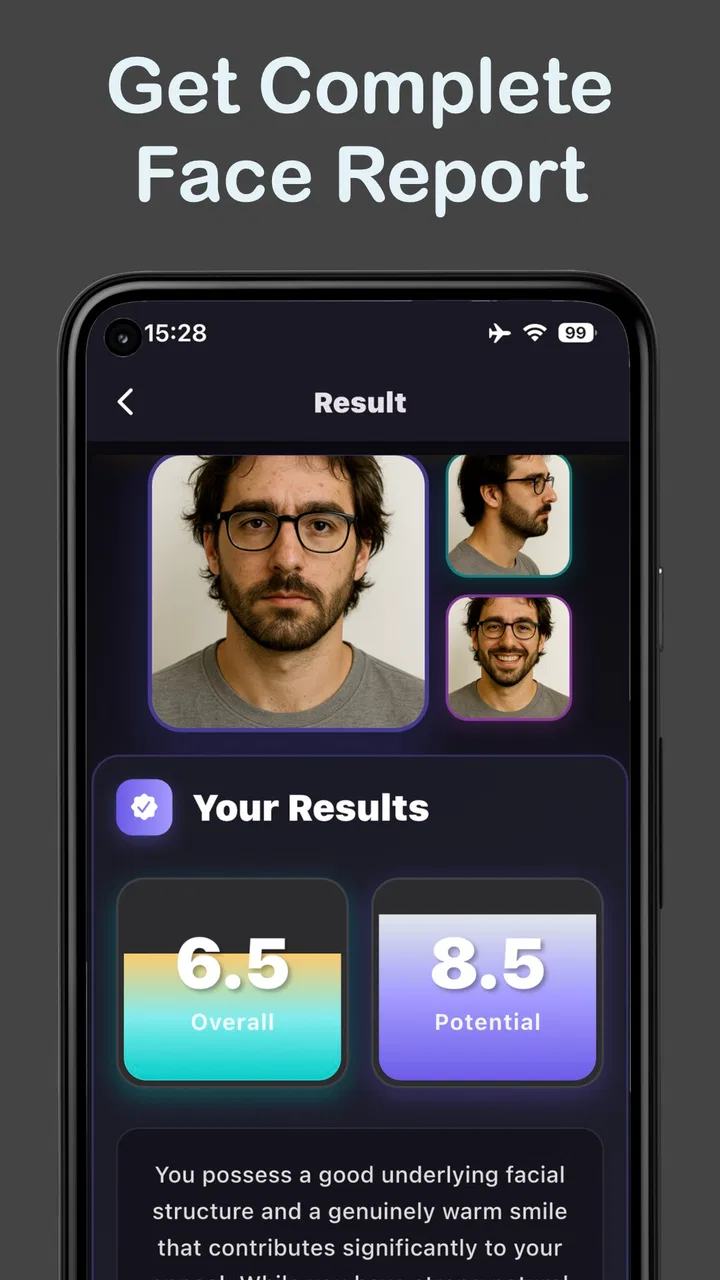
Attractiveness AI is an innovative app designed to analyze and enhance facial features using artificial intelligence. It works by scanning a photo of your face and providing insights into aspects such as symmetry, skin tone, and other factors that contribute to attractiveness. The app uses advanced algorithms to suggest improvements and highlight your best features.
02Is Attractiveness AI safe to use regarding privacy concerns?
Yes, Attractiveness AI prioritizes user privacy and data security. The app stores photos and personal data securely, ensuring that your information is not shared with third parties. It complies with strict privacy regulations and provides options to delete your data at any time, giving you complete control over your information.
03Can Attractiveness AI be used for professional purposes?
Absolutely. Attractiveness AI can be a valuable tool for professionals in fields such as modeling, photography, and social media. By providing detailed insights and enhancement suggestions, it helps individuals present their best image, whether for a portfolio, social media posts, or professional headshots.
04Does Attractiveness AI offer customization options?
Yes, the app offers a range of customization options to suit different user preferences. You can adjust the level of enhancement and choose specific features to focus on. This flexibility allows users to tailor the app’s suggestions to align with their personal style and desired outcomes.
05Are there any costs associated with using Attractiveness AI?
Attractiveness AI offers a free version with basic features, allowing users to explore the app’s capabilities. However, for advanced features and in-depth analyses, a premium subscription is available. This subscription provides access to enhanced functionalities and regular updates, ensuring users receive the best possible experience.
Pros
- Intuitive user interface for easy navigation.
- High-quality AI-generated content.
- Regular updates with new features.
- Customizable settings for personalization.
- Efficient performance with minimal lag.
Cons
- Requires a stable internet connection.
- Limited free features; premium needed.
- Some features may be complex for beginners.
- Occasional minor bugs in newer updates.
- Heavy battery usage during prolonged sessions.

Attractiveness AI
Gallery